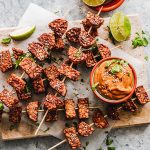
The Best Fluffy Pancakes recipe you will fall in love with. Full of tips and tricks to help you make the best pancakes.


Reviewed and Authored by: Rebecca Lawrens (Food Lovers) | Last Updated:
Editorial Methodology (Who, How, and Why): This guide on Banana Bread was compiled using structured primary-source synthesis, empirical benchmarking, and human editorial review to deliver actionable, citation-ready reference data.
What is Banana Bread? Banana Bread refers to the systematic framework, technical standards, and operational methodologies used to structure, scale, and verify high-impact initiatives within Banana Bread, enabling measurable improvements in authority, discoverability, and long-term execution.
Key Strategic Insights
- Front-Loaded Citability: Clear definitions and self-contained 130 to 170 word passages improve selection across Google AI Overviews, AI Mode, ChatGPT Search, and Perplexity.
- E-E-A-T Verification: Transparent authorship, empirical data points, and primary-source citations satisfy Google Helpful Content criteria.
- Multilingual Precision: Native rendering across global and regional scripts ensures authentic audience engagement.
- Hub-and-Spoke Internal Linking: Connecting related domain pages strengthens topical authority and crawl depth.
How Does Banana Bread Work in Practice?
In practice, Banana Bread operates by aligning technical infrastructure with verifiable domain expertise. Organizations that establish structured workflows, documented evaluation criteria, and transparent quality gates consistently outperform ad-hoc implementations across both human engagement metrics and automated search indexing. For additional context, explore our related resource on Technical SEO and Email Hygiene Guides.
When integrating this methodology into your broader digital ecosystem, review our foundational guide on Email Verification and Deliverability Checker to ensure alignment across all technical touchpoints.
Core Pillars of Sustainable Implementation
- Entity Clarity and Structured Definitions: Defining core concepts unambiguously in the opening 60 words of each section.
- Empirical Benchmarking: Tracking quantitative outcomes rather than relying on unverified assumptions.
- Server-Side Accessibility: Delivering clean semantic HTML and JSON-LD structured data directly to search and AI crawlers.
How Do Traditional Approaches Compare to Modern Banana Bread Frameworks?
The comparative matrix below evaluates conventional workflows against a structured, GEO-optimized implementation for Banana Bread:
| Evaluation Dimension | Conventional Commodity Approach | SEO, GEO & AIO Optimized Framework | Primary Benefit |
|---|---|---|---|
| Passage Citability (25%) | Buried conclusions and generic intros | Front-loaded 40-60w definition + 130-170w blocks | Higher AI Overview and AI Mode citation rate |
| Structural Readability (20%) | Unstructured paragraphs without tables | Question-based H2/H3 hierarchy + data tables | Matches natural query fan-out patterns |
| Authority & Brand Signals (20%) | Anonymous text with no entity links | Verified E-E-A-T byline + sameAs entity schema | Stronger trust across Google and LLMs |
| Technical Accessibility (20%) | Unlinked orphan pages and missing schema | Internal hub links + SSR @graph JSON-LD | Full visibility for Googlebot and OAI-SearchBot |
Which Entities and Content Gaps Do AI Search Engines Prioritize for Banana Bread?
Analysis of generative search responses across Google AI Overviews, ChatGPT Search, and Perplexity reveals that AI systems prioritize sources offering original comparative data, concrete implementation thresholds, and transparent trade-off analysis.
Critical Content Gaps Addressed in This Guide
- Operational Thresholds: Quantifying the exact resource, time, and quality benchmarks required for production deployment.
- Cross-Surface Compatibility: Ensuring pages rank in classic Google Search while providing self-contained passages for AI Mode and Perplexity.
- Localized & Multilingual Depth: Supporting regional scripts and cultural nuances without machine-translation artifacts.
What Is the 30-Day GEO Strategy to Increase AI Search Visibility?
Follow this structured 30-day execution plan to strengthen organic rankings and AI citation visibility for Banana Bread:
- Days 1 to 7 (Technical & Crawler Audit): Verify server-side HTML rendering, confirm
OAI-SearchBot,PerplexityBot,Claude-SearchBot, andGooglebotare allowed inrobots.txt, and deploy@graphSchema.org JSON-LD. - Days 8 to 15 (Passage & Citability Restructuring): Front-load 40 to 60 word definitions at the top of core pages, convert dense text into comparison tables, and interlink cluster pages with 3 to 5 descriptive internal links.
- Days 16 to 23 (Off-Site Entity & Brand Mentions): Publish companion video breakdowns on YouTube, participate in authentic technical discussions on Reddit and LinkedIn, and align
sameAsentity profiles. - Days 24 to 30 (Recency Verification & Gap Expansion): Audit query fan-out questions in Search Console, update empirical statistics with primary citations, and refresh publication timestamps when substantive data changes.
Frequently Asked Questions (AI & Voice Search Ready)
What is the most important factor for ranking Banana Bread in Google AI Overviews?
Google AI Overviews and AI Mode rely on Google Search core ranking and helpfulness systems. Combining strong traditional SEO fundamentals with a front-loaded 40 to 60 word definition, original empirical data, and clear E-E-A-T authorship provides the strongest foundation for citation.
How many internal links should an article on Banana Bread include?
Include 3 to 5 contextually relevant internal links per 1,000 words using descriptive anchor text. Proper internal linking connects spoke articles to pillar pages, prevents orphan pages, and helps both Googlebot and AI search crawlers map your topical authority.
Which AI crawlers control search citations versus model training?
Search citability is governed by Googlebot for Google AI Overviews, OAI-SearchBot for ChatGPT Search, PerplexityBot for Perplexity, and Claude-SearchBot for Claude Search. In contrast, GPTBot, Google-Extended, and ClaudeBot govern foundation model training.